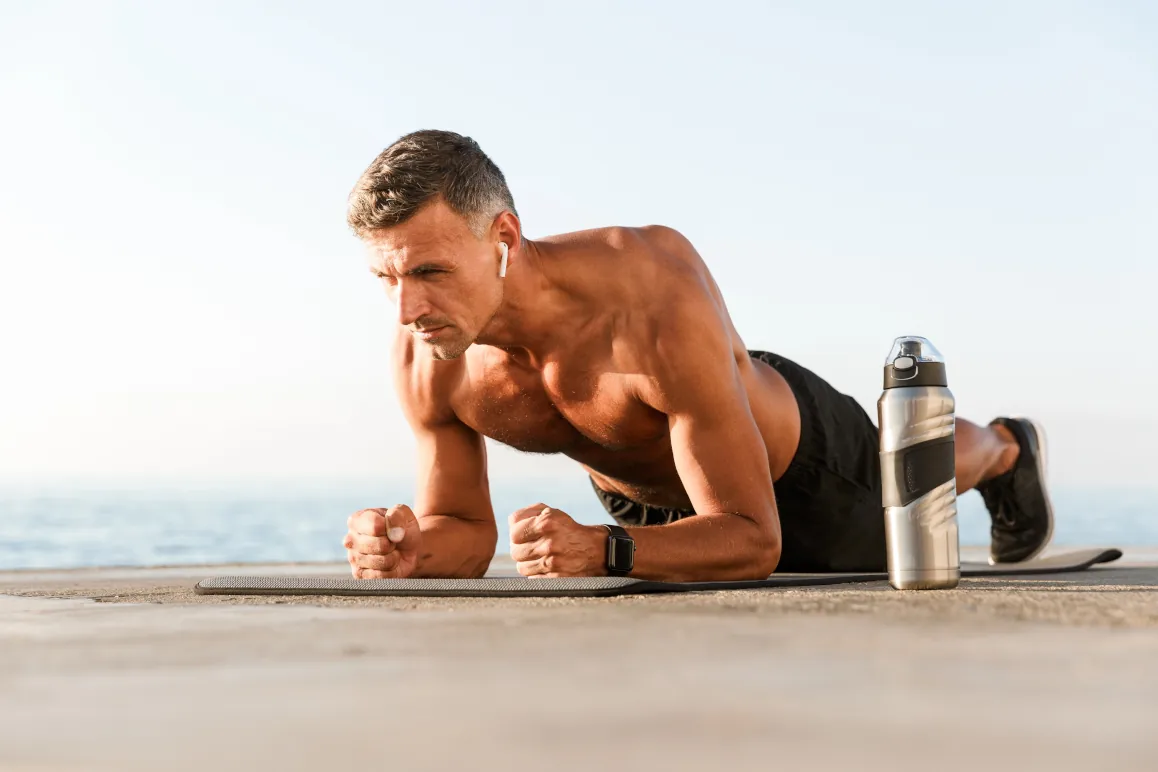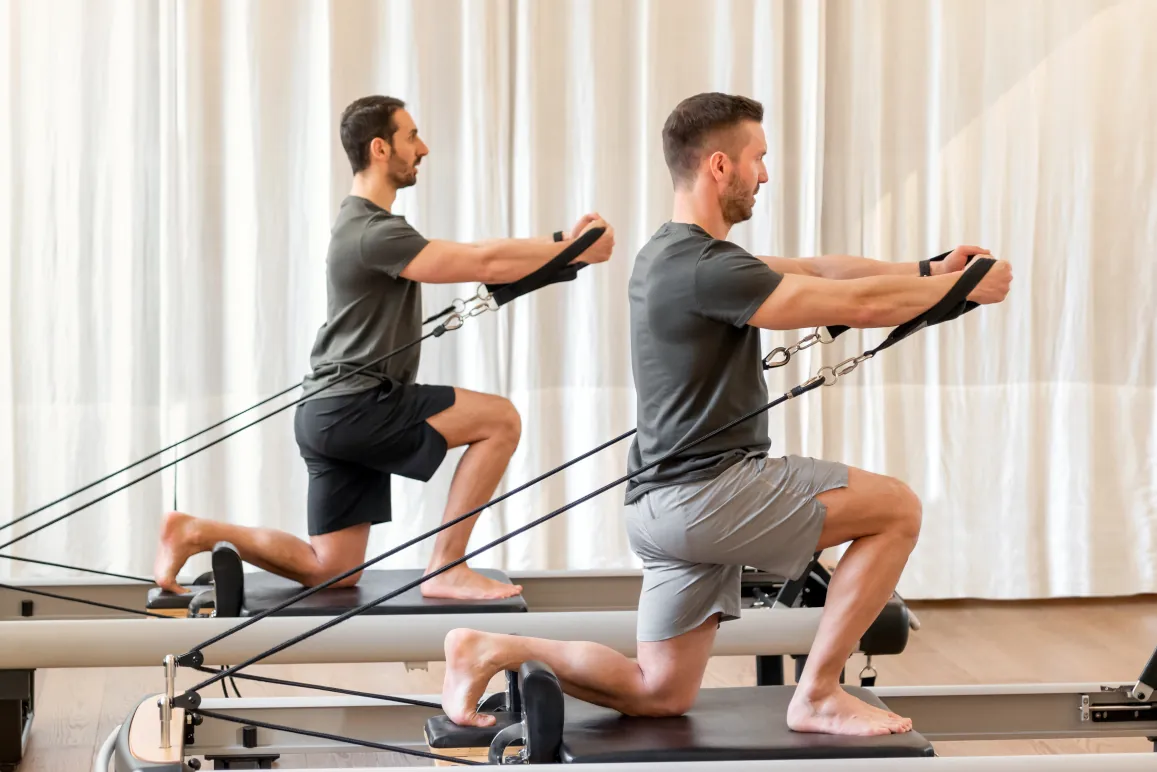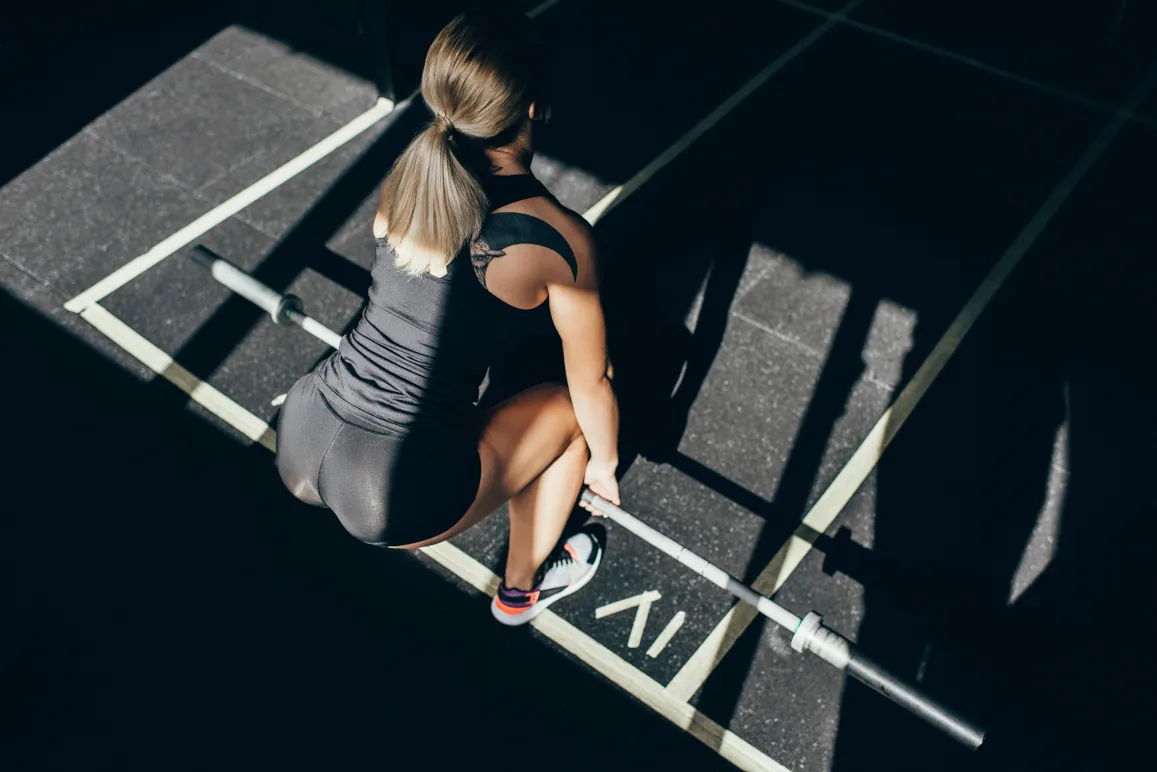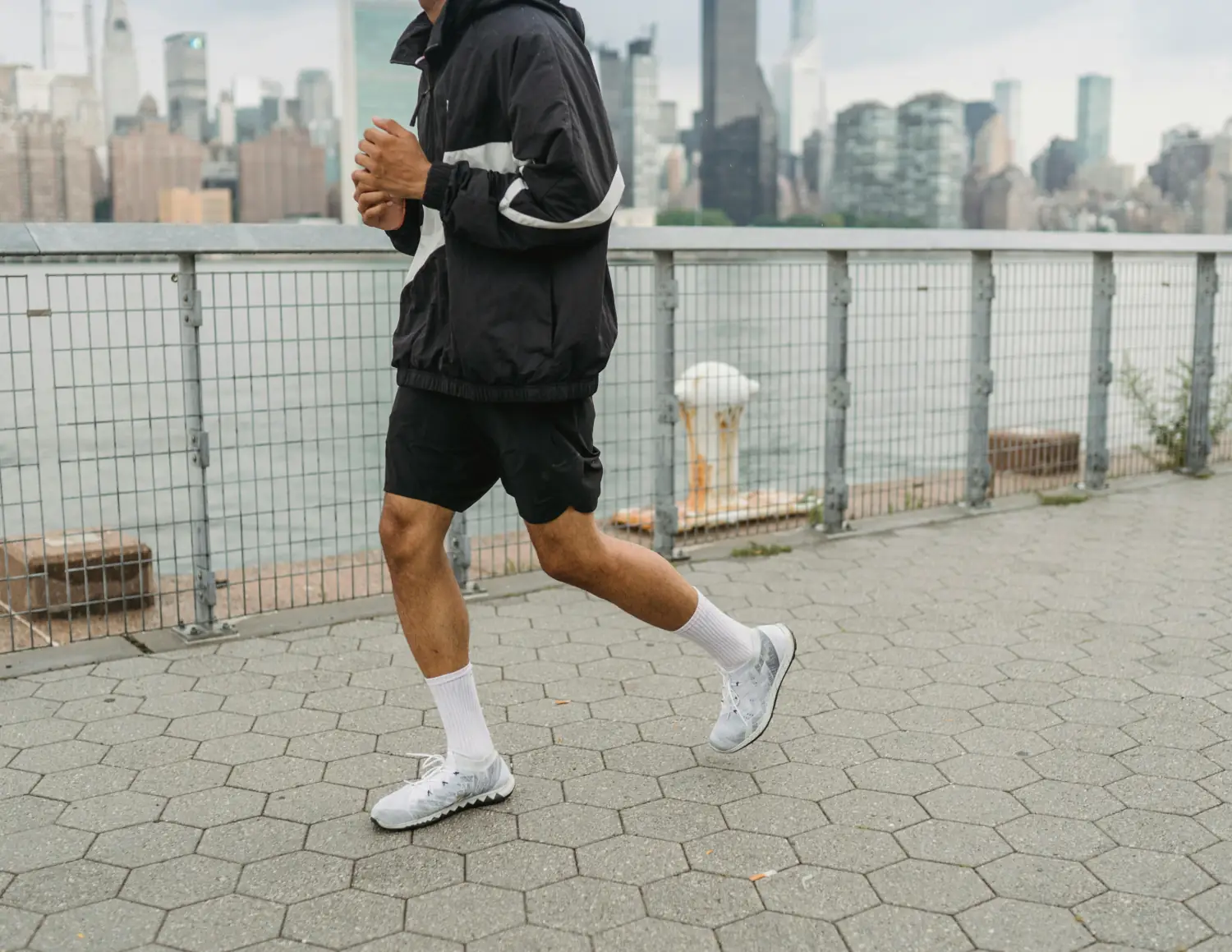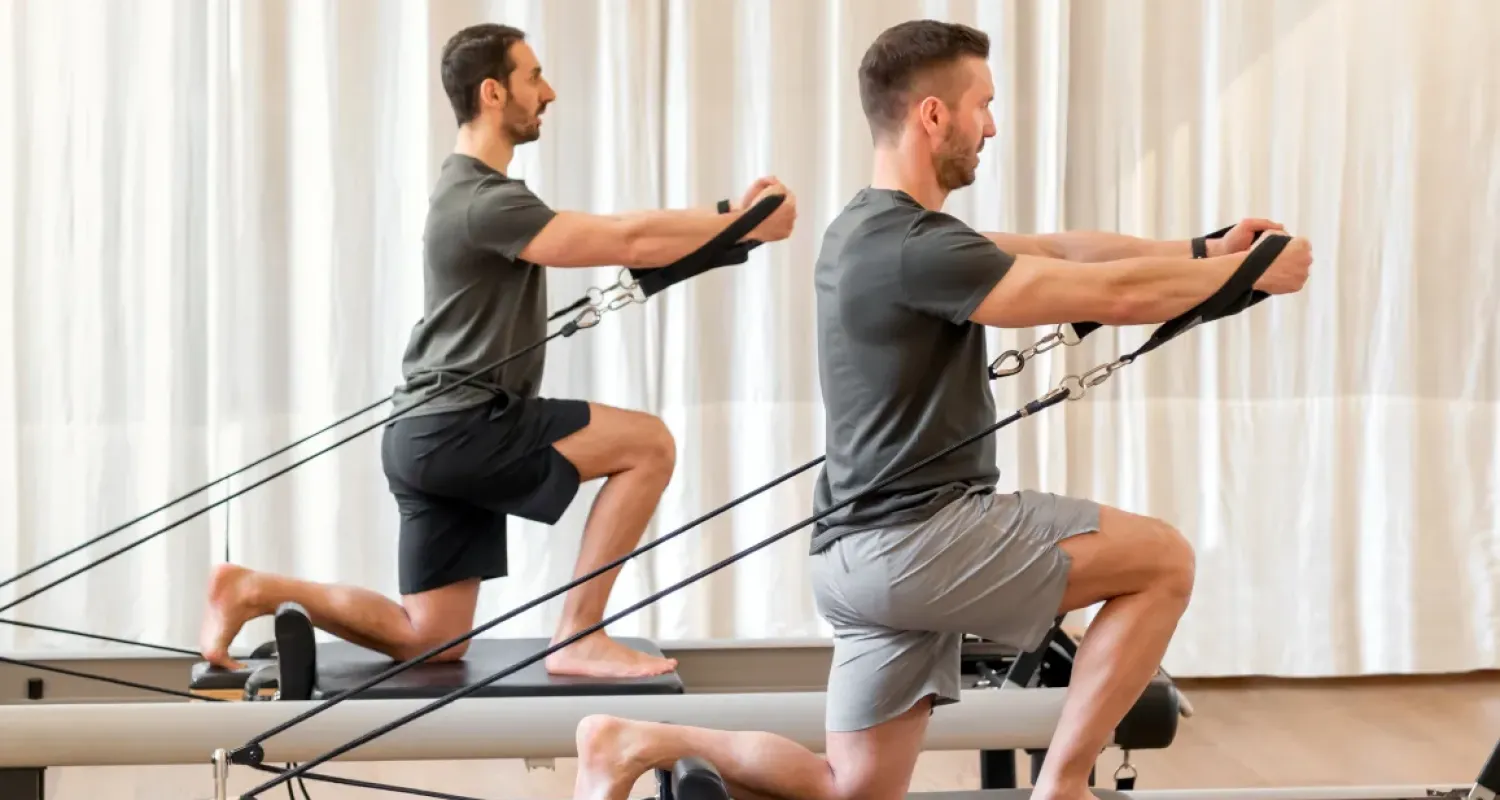
If your training week includes heavy lifts, long runs, pickup games, or a lot of time convincing yourself that your hips are “just tight,” Pilates might deserve a spot in the rotation.
And no, you don't have to trade your dumbbells for a reformer.
Think of Pilates as the work that can help support everything else you like doing.
It trains control, stability, mobility, and the deeper muscles that don't always get much attention when the goal is simply to move more weight.
Strong is good. Strong and able to move well is even better.
If You Lift: Build a Stronger Foundation
Heavy squats, deadlifts, rows, and presses all require more than big muscles.
They require your trunk, hips, and stabilizing muscles to work together to keep you controlled under load.
Pilates puts a major emphasis on core strength and muscular control, particularly around the trunk and pelvis. Research suggests Pilates can improve core muscle strength, although the evidence is still developing and it isn't necessarily superior to other well-designed exercise programs.
For lifters, that makes it a useful complement to strength training…not a replacement for it.
More control can mean creating a better foundation for the big lifts you already love.
If You Play Sports: Control Matters
Changing direction quickly, rotating, accelerating, decelerating, and staying balanced all require your body to transfer force efficiently.
That's where trunk strength and stability come into the picture.
Research on core training in team-sport athletes has found improvements in areas including balance, sprinting, jumping, and change-of-direction performance.
Pilates gives you another way to train those qualities through controlled movement, rotation, balance, and stability.
Because being strong in one direction is great.
Being able to control your body in every direction is pretty useful too.
If You Run: Give Your Lower Body Some Backup
Running is repetitive by nature.
Step after step, your hips, knees, ankles, and trunk are constantly working together to keep you moving forward.
Pilates can complement your running routine by strengthening the hips, glutes, trunk, and other stabilizing muscles while challenging balance and control. It isn't an injury-proof magic trick, nothing is. But building better strength and movement control can give your body a stronger foundation for the miles you're asking it to handle.
If Your Hips Are Always Tight: We Need to Talk
You know the feeling.
You finish leg day.
You sit at your desk.
You stand up several hours later and suddenly feel approximately 87 years old.
Pilates combines strength with controlled movement through different ranges of motion, making it a useful way to work on mobility without simply holding a stretch and hoping for the best.
Better mobility can help you access positions more comfortably and move with less stiffness.
And sometimes the thing you call “tightness” isn't asking for more stretching.
It's asking for more strength and control.
Build Functional Strength
One reason Pilates works so well alongside traditional training is that it asks you to pay attention to muscles that are easy to ignore.
Your deep core.
Glutes.
Back.
Hips.
Shoulder stabilizers.
The muscles responsible for controlling the movement not just creating it.
That can translate into movement that feels stronger and more intentional in the gym, on the field, and in everyday life.
It's less about how much force you can produce once and more about how well you can control your body while producing it.
Mobility Is Part of Performance
Mobility sometimes gets treated like the boring thing you're supposed to do after the “real” workout.
Until you can't comfortably hit depth in a squat.
Or rotate through your upper back.
Or get your arms overhead without compensating somewhere else.
Then suddenly it feels pretty important.
Pilates challenges strength through controlled ranges of motion, giving you an opportunity to work on flexibility, mobility, and body awareness at the same time.
More range isn't automatically better.
Useful range that you can actually control is the goal.
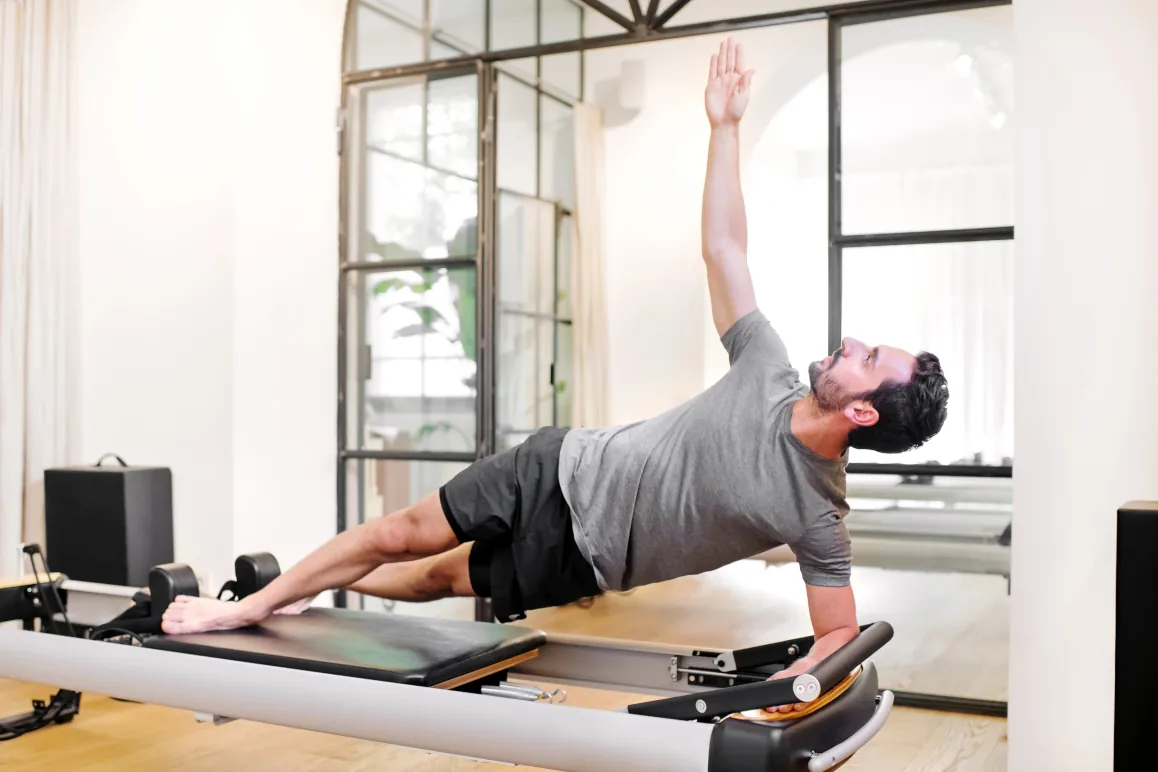
Can Pilates Help With Injury Prevention?
No workout can promise that you'll never get hurt.
But better balance, strength, coordination, and control may help reduce some of the unnecessary stress created by poor movement patterns.
Pilates has also been studied extensively in people with low back pain, with systematic reviews finding benefits for pain and function compared with doing no exercise.
The bigger idea is simple:
A stable, mobile, well-controlled body gives you more options when you move.
That's useful whether you're deadlifting 300 pounds or carrying groceries up three flights of stairs.
You Don't Have to Become a Pilates Guy
Although, you might.
Start by adding one Pilates session into your existing routine.
Keep lifting.
Keep running.
Keep playing your sport.
Just give yourself some time each week to work on the parts of fitness that aren't always measured by a PR.
Control.
Mobility.
Balance.
Stability.
Because the goal isn't to choose between being strong and moving well.
You can train for both.